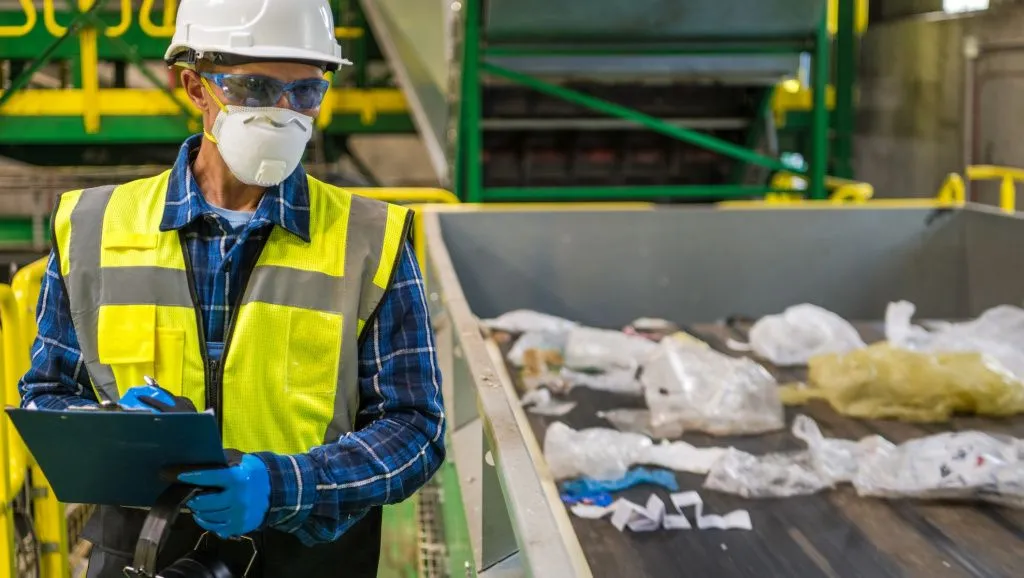
BRICS countries are actively discussing the transition to a circular economy. Why is this needed? Which national programmes and joint initiatives are already in place? And what still needs to be done? The post Waste recycling technologies: why are BRICS countries moving towards circular economy? appeared first on KBC Digital.
Recognising this, BRICS member states are actively discussing the transition to a circular economy (CE). In September 2026, waste recycling technologies once again became an important topic of discussion at the BRICS Summit in New Delhi.
In addition, the circular economy is one of the main ways to achieve the eleventh Sustainable Development Goal (SDG 11) adopted by the UN. Its official name is “Ensuring the openness, safety, resilience and environmental sustainability of cities and human settlements”. At the same time, experts stress that achieving this goal requires not only financial investment but also cooperation and coordination between different types of stakeholders, both within individual countries and between groups of countries.
“The BRICS group is implementing both national programmes and joint initiatives as part of the transition to a circular economy. Despite differences in approaches, there are also common trends: a focus on developing infrastructure, encouraging waste recycling and exchanging innovative technologies,” Ekaterina Reshneva, Associate Professor at the Department of Sectoral Economics of Empress Catherine II Saint Petersburg Mining University and Candidate of Economic Sciences, said in an interview with TV BRICS.
BRICS countries currently account for 49.5 per cent of the world’s population and around 40 per cent of global GDP. The grouping includes the world’s largest energy producers and consumers, as well as states with significant potential in critical resources and technologies. Experts consider all this an important advantage in achieving sustainable development goals.
Moreover, according to Gabriela de Fatima Cia, an expert in sustainable development, international environmental cooperation, water resources management and forest ecosystems, member of the BRICS Student Commission and coordinator of the Youth Secretariat of the Centre for Integration and Cooperation of Russia and Latin America (CICRAL), the transition to a circular economy in the BRICS founding countries is now more than realistic. However, it is highly uneven.
“The transition to a circular economy is progressing faster where infrastructure investment and compliance with legislation go hand in hand, and it stalls where legislation outpaces financing and institutional capacity,” Gabriela de Fatima Cia says.
In this respect, China is currently the most advanced in terms of infrastructure. In 2020, a provision was added to the country’s legislation on solid waste management making household waste sorting mandatory. In addition, China completely banned the import of waste.
The country has created the world’s largest network of waste-to-energy facilities – more than 2,170 waste incineration plants processing 1.11 million tonnes per day. The “Waste-Free City” programme currently covers 113 cities, while the new national action plan for 2026–2030 sets a target of processing 45 billion tonnes of bulk waste annually.
“The National Development and Reform Commission of China (NDRC) announced the publication of a plan for developing the circular economy in the country during the implementation of the 15th Five-Year Plan (2026–2030). According to the document, by 2030, the circular economy system covering production, consumption, recycling and the reuse of resources will be further optimised,” Ekaterina Reshneva said in an interview with TV BRICS.
Brazil presents the opposite picture: strict legislation but relatively weak implementation. Since 2010, the National Solid Waste Policy has established a clear waste management hierarchy and a unique Brazilian “reverse logistics” model based on shared producer responsibility. However, in 2022, only 1.8 per cent of municipal waste was actually recycled, says Brazilian expert Gabriela de Fatima Cia. There are positive developments here as well. For example, the recycling rate for aluminium cans has reached 100 per cent.
Experts point to Brazil’s achievements in implementing technologies for composting organic waste, which can reduce the volume of such waste in landfills by 25 per cent.
Brazil is also actively using anaerobic digestion methods. As a result, two useful products are obtained: biogas, a mixture of methane and carbon dioxide, which is used to generate electricity and heat, and digestate – a high-quality organic fertiliser. Among other promising projects, experts highlight technologies for treating wastewater using fungi.
“Scientists from the Federal University of Alagoas (UFAL) in Brazil are developing a technology for treating wastewater using specially selected strains of fungi. This work is being carried out as part of a joint project with Tambov State Technical University and China Three Gorges University,” Ekaterina Reshneva says.
In Russia, the so-called waste reform began in 2019, when the collection and disposal of municipal solid waste became the responsibility of regional operators rather than municipal institutions. The goals of the reform are to combat illegal dumping and increase waste recycling. Targets were even set for recycling 60 per cent of waste. However, by 2024, around 90 per cent of waste was still being sent to landfills, and by 2020, separate waste collection had been established in only a few Russian regions, Gabriela de Fatima Cia notes.


