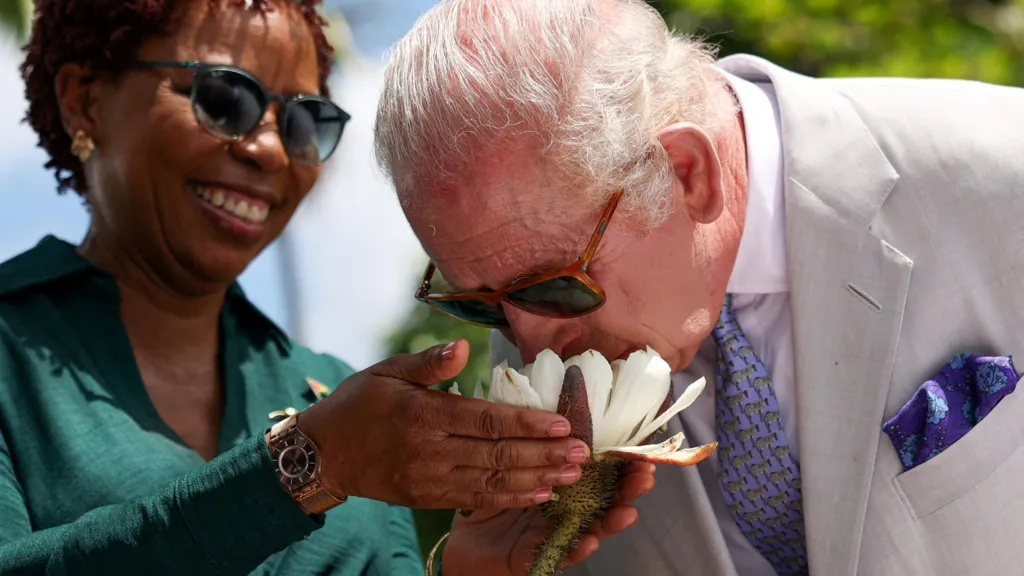
As part of his visit on Friday, the King also shared a moment with a veteran from Guyana who fought for Britain in the Second World War during an event at the Commonwealth War Graves in the capital, Georgetown. The post King visits Guyanese slave rebellion site on Caribbean tour appeared first on KBC Digital.
He visited Independence Park in Georgetown to remember the Demerara Slave Rebellion of 1823, which saw an uprising by thousands of enslaved people.
Accompanied by Guyana’s Culture Minister, Steven Jacobs, he was told how hundreds of slaves were killed by colonial leaders during the rebellion and many of those who survived were executed close to where the King stood.
“This ground was used as a public execution site,” it said, “where enslaved persons…were condemned to death and hung.”
The moment of reflection was what Buckingham Palace had described as the King “not shying away from the UK’s colonial legacy” and described today as a chance for the King to reflect on Guyana’s history of slavery and resistance.
In 2022, Charles described how he was on a personal journey of discovery and was continuing to “deepen my own understanding of slavery’s enduring impact”, in a speech at the opening of a Commonwealth summit hosted by Rwanda.
Independence Park, which is now a sports ground, drew a crowd of dozens of schoolchildren.
The King stopped to talk to many of them, asking them about their homework, their holidays and if they’d had a day off school.
Outside one of the King’s engagements later in the day, a small but noisy group of protesters gathered.
Many held placards saying “no apology will return what was stolen, reparations now” and “justice must not depend on wealth, status and connections”.
“This great wealth was built on the backs of slavery,” said protester, Guyanese politician, Terrence Campbell.
“I do not want the British public to think that by me saying reparations can take various forms, it means that they do not have responsibility for reparations. They do, because the United Kingdom benefited tremendously from slavery.”
The King will not be apologising for the UK’s involvement in the slave trade during the visit, nor will he offer reparations – compensation from those countries that benefited from the slave trade – in line with the position of the UK government.
This tour has seen a number of demonstrations so far, but none have seriously disrupted the King’s programme.
Royal tours often include cultural exchanges, and the King’s trip to Guyana saw an unusual mix-up of musical styles.